

During steam distillation of flowers, leaves, roots, seeds or resins, something special occurs: While essential oil separates as a shiny layer on top, a milky water forms at the bottom: the hydrolate. Less intense than essential oil, but precisely for that reason surprisingly versatile and gentle in use.
The watery end product (hydrolate) of the distillation contains all water-soluble distillable substances and also the water-soluble fragrant components of the plant. The scent is less intense to subtle because usually only a limited amount of fragrant substances are water-soluble. Hydrolates carry the life force of the herb within them and work invitingly on body and mind. Thanks to their mild nature, they are suitable for everyone: young and old, also during pregnancy, illness or in periods of sensitivity. No risk of addiction, rarely side effects, only pure plant power in liquid form.
Internal use
Hydrolates can easily be diluted in water and drunk. You can use hydrolates for acute conditions
or as a three-week course (aligned with the natural 21-day rhythm of your body). You drink the hydrolate drink spread throughout the day, preferably at room temperature and between meals.Standard dosage:
- Adults: 1 to 2 tablespoons hydrolate per day in 0.5 to 1 liter of still water
- Children: build up per year of life (e.g. 2 years = 1 teaspoon per day)
- Babies: a few drops in the bottle
What can you use hydrolates for internally?
The applications of hydrolates are very diverse, but here is a small selection:
- For tension, stress or fatigue
- As support for respiratory conditions
- For digestion and liver cleansing
- For good sleep or detox cure
- You can also simply enjoy hydrolates as delicious flavorings in drinks and dishes.
Some commonly used hydrolates:
- Orange blossom: calms stress, burn-out and inner restlessness
- Rosemary verbenone: supports detox, digestion and clear focus
- Thyme Linalol: works powerfully for respiratory infections and strengthens immunity
- True chamomile: calming, soothing, suitable for young and old
External use
Hydrolates can also be used externally. You use them pure or diluted, depending on the application. Here is an overview of common applications:
- Skin & face: As a face mist, lotion or gentle toner. Hydrolates care for and calm the skin, even with redness, eczema or sensitivity. Recommendations: lavender, chamomile, damask rose
- In the room: Spray hydrolates with a spray bottle or in a diffuser for a pure and calm atmosphere, at home, in practice or during illness.
- In the bath: Add a splash to a foot, hip or full bath.
- Dosage:
- Baby bath: 1 teaspoon
- Adults: 1 to 2 tablespoons
- Jacuzzi: up to 100 ml
- Dosage:
- Compresses: Warm for abdominal complaints or tension, cold for swelling or bruises. Recommendations: chamomile, strawflower
- Mouth rinse: For aphthae, sore throat or sensitive gums: rinse mouth with lavender, chamomile or tea tree (do not swallow)
- Eye care: For tired or irritated eyes: a compress with damask rose or cornflower.
- Hair care: Calms the scalp, reduces flakes and strengthens the hair. Use: as a spray or mixed into shampoo/conditioner. Hydrolates: rosemary verbenone, chamomile, …
- For babies & toddlers: Gentle and safe with diluted use. For soothing sprays, baths or skin care. Suitable types: lavender, chamomile, damask rose
Want to know more?
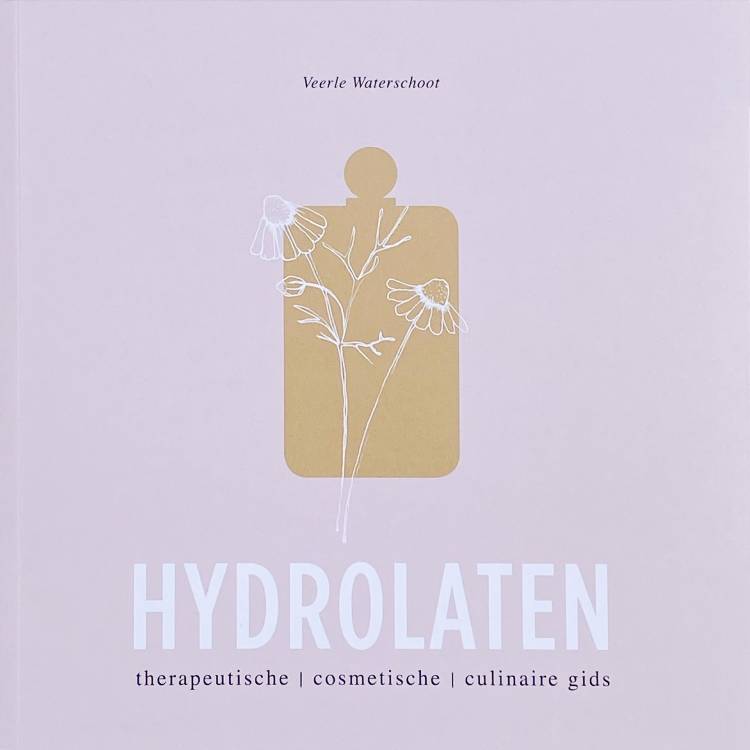
Anyone who wants to delve deeper into the world of hydrolates, their applications, effects and energetic qualities, we heartily recommend the book Hydrolates by Veerle Waterschoot. Veerle is considered THE reference in Belgium in this field. Her knowledge is almost inexhaustible and based on years of practical experience, observation and deepening in the power of hydrolates.
Want to get to know hydrolates by experimenting with them? Start simple: one hydrolate, one application and feel what it does for you.
Do you have questions about which hydrolates suit you? We're happy to help.